Explore / 08
Training recovery
For gym-goers, athletes and marathoners: explore ordinary post-exercise tiredness, practical recovery routines and label reading without miracle stacks. This is distinct from our Daily energy guide to everyday daytime tiredness.
Start here
After-training tiredness, without a miracle recovery stack
Rest, sleep, food and a careful look at optional recovery products after training.
Read the full guide ↗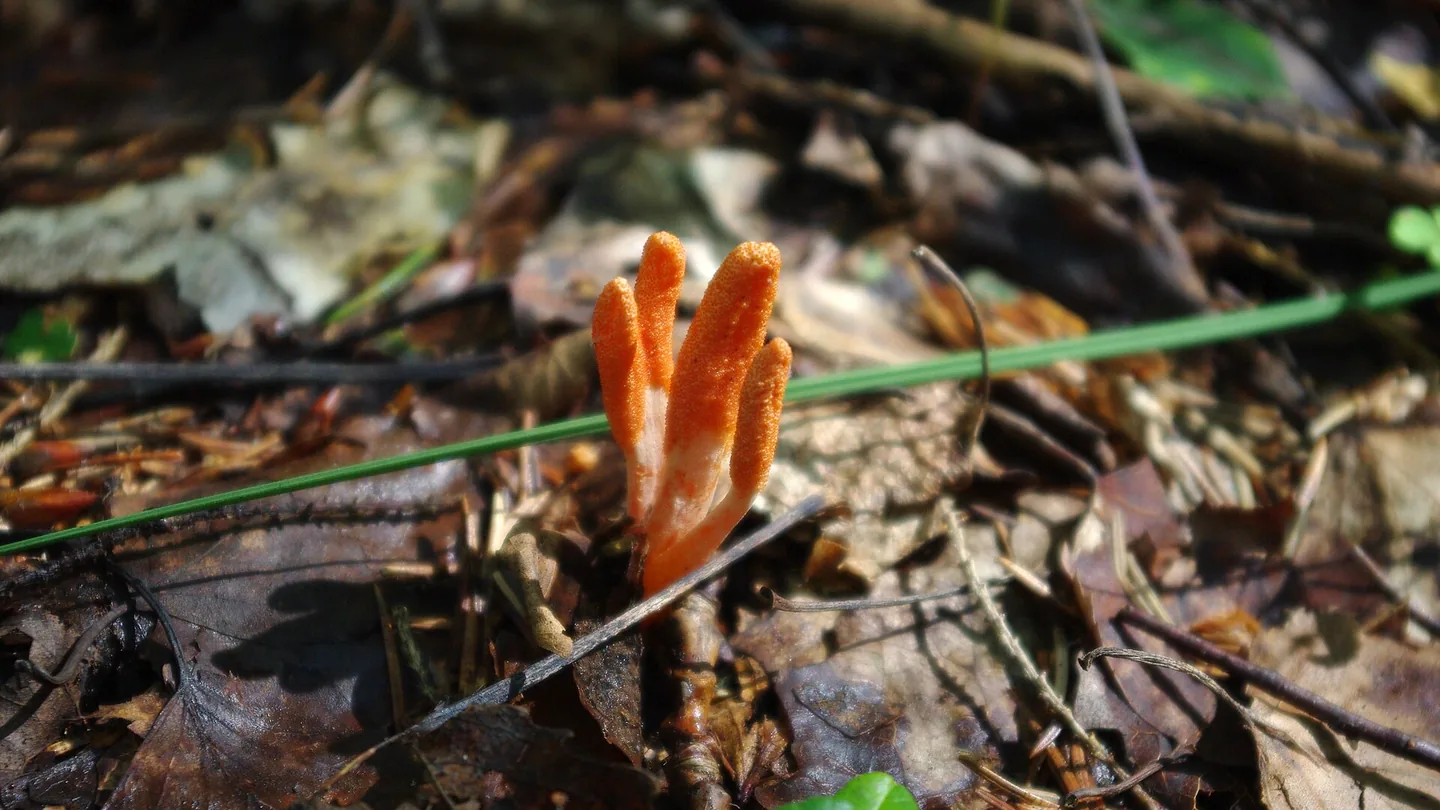
Cordyceps · fungusThe orange mushroom in the recovery conversation
East meets West · the research
Research from Asia on this topic
Studies published in Japanese, Korean, Malaysian, Chinese and TCM journals, read with the same care as our other sources. Some were published in Japanese, Korean, Chinese or Malay; we show the original title and an English translation, and summarise them in plain English. We note small samples, animal studies and company-run trials. These summaries describe what was studied; they are not promises of results for you.
- Malaysia / SE Asia
Abidin NZ, Ooi CH, Nosaka K, et al. (2024). Effects of Resveratrol Supplementation on Delayed Onset Muscle Soreness and Muscle Recovery: A Systematic Review. Malaysian Journal of Medical Sciences (Malaysia).
In plain English: A systematic review from Universiti Sains Malaysia of 10 studies (238 people) on resveratrol after exercise; it may reduce some muscle-damage markers and soreness to varying degrees, but results varied with the type of exercise, dose and timing, and longer-term studies are lacking.
- Malaysia / SE Asia
Mohd Daud SM, Sukri NM, Johari MH, et al. (2023). Pure Juice Supplementation: Its Effect on Muscle Recovery and Sports Performance. Malaysian Journal of Medical Sciences (Malaysia).
In plain English: A review from Malaysia's National Defence University on polyphenol-rich fruit juices as a food-first option for muscle recovery and sports performance after hard exercise, summarizing an evidence base that is still developing.
- Korea
Lee NH, Jung HC, Lee S. (2016). Red Ginseng as an Ergogenic Aid: A Systematic Review of Clinical Trials. Journal of Exercise Nutrition & Biochemistry (Korea).
In plain English: A systematic review of 14 trials (searching English and Korean databases) on red ginseng and exercise; most found no improvement in aerobic or sprint performance, and results for recovery markers were mixed.
- Malaysia / SE Asia
Ahmad NS, Ooi FK, Saat Ismail M, et al. (2015). Effects of Post-Exercise Honey Drink Ingestion on Blood Glucose and Subsequent Running Performance in the Heat. Asian Journal of Sports Medicine (Iran) · research from Universiti Sains Malaysia.
In plain English: A small randomized crossover study of 10 runners in Penang; after a 60-minute run in 31°C heat, rehydrating with an acacia honey drink rather than plain water was followed by a longer distance in a second 20-minute run.
- Japan
小栗和雄, 館俊樹, 薮本保, 松岡敏男 (2015). 遅発性筋痛および筋機能低下に対するクルクミン投与の効果 [Effects of curcumin on delayed-onset muscle soreness and loss of muscle function]. 教育医学 (Journal of Education and Health Science) 60(4):206–215. Japan.
Japanese Published in Japanese with an English abstract; summary by Open Leaf. Author names are shown as published.
In plain English: Ten healthy men took 150 mg of curcumin or a placebo 30 minutes before a hard elbow-curl workout. After a three-month break, they swapped (a randomized, double-blind design). With curcumin, they reported less soreness and kept more strength and range of motion over the next four days. With ten people and one dose, this is an early result.
- Korea
Yoon SJ, Kim KH, Kim CJ, Park HC, Kang KH, Kim MJ, Kang SM, Kwak UH, Kim HJ (2008). 홍삼 섭취가 유.무산소성 운동수행능력과 중추 및 말초피로에 미치는 영향 [Effects of red ginseng intake on aerobic and anaerobic exercise performance and on central and peripheral fatigue]. 고려인삼학회지 (Journal of Ginseng Research) 32(3):210–219. South Korea.
Korean Published in Korean; summary translated by Open Leaf from the Korean abstract.
In plain English: Thirty men were split into three groups for 8 weeks: endurance training with red ginseng, training with a placebo, or red ginseng alone. Twenty-four finished. Aerobic fitness (VO2max) and blood amino-acid markers did not change significantly in any group. The authors saw small upward trends and suggest that ginseng plus training may help with tiredness, but read that cautiously because the main measures did not differ statistically.
- Korea
Paik IY, Han DS, Park TS, Kwak YS, Suh SH, Jin HE, Kim YI, Woo JH (2006). 목질진흙(상황)버섯과 동충하초 투여가 운동 시 혈중 피로요인 변화와 항산화체계에 미치는 영향 [Effects of sanghwang mushroom (Phellinus linteus) and Cordyceps militaris on blood fatigue markers and the antioxidant system during exercise]. 생명과학회지 (Journal of Life Science) 16(7):1090–1096. South Korea.
Korean Published in Korean; summary translated by Open Leaf from the Korean abstract.
In plain English: Fifteen male university students drank 100 ml a day of a sanghwang-mushroom drink, a Cordyceps militaris drink or a placebo for six weeks, with five students in each group. Exercise time did not differ between the groups. The mushroom groups showed somewhat lower fatigue-related blood markers and better antioxidant readings. With five people per group, this is a very early signal, not proof.
Each record was checked against PubMed, J-STAGE, KoreaScience or the DOI registry on 14–15 November 2026. Translations are Open Leaf’s own; please check the original for exact wording. Not medical advice.