Explore / 03
Joints & movement
Comfort and confidence in everyday movement involve more than a capsule. Begin with practical routines, suitable activity and honest uncertainty about supplement evidence.
Start here
Joint comfort is bigger than a supplement
Movement, mixed evidence and the questions to ask before buying a joint supplement.
Read the full guide ↗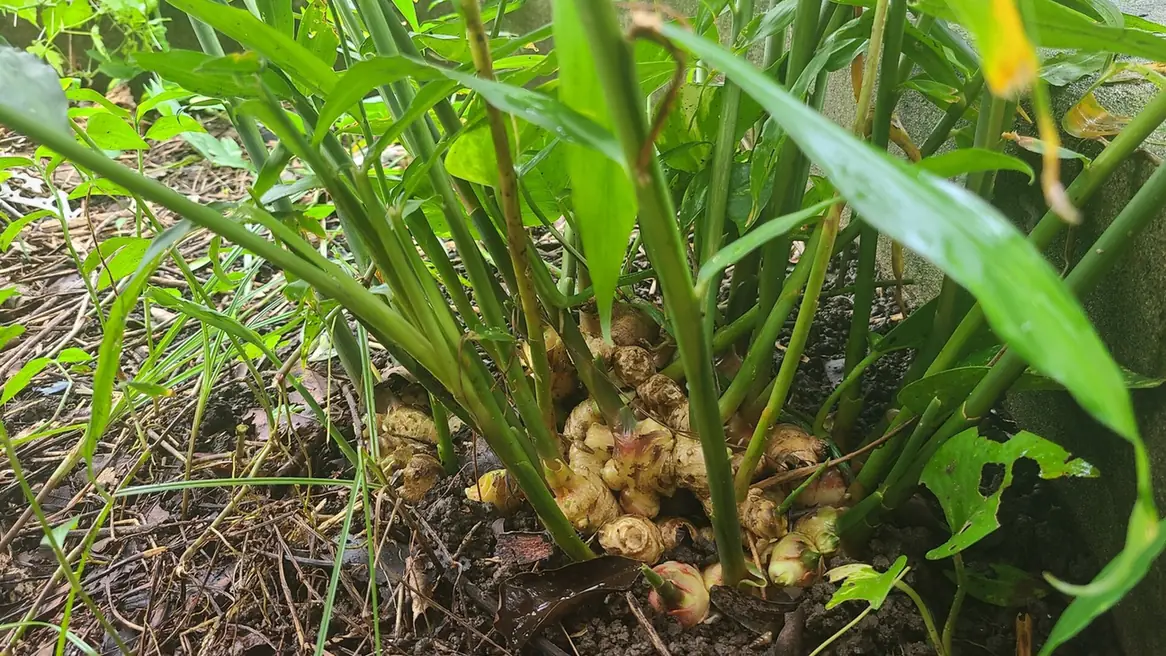
GingerKeep moving: the warming root of Asian kitchens
East meets West · the research
Research from Asia on this topic
Studies published in Japanese, Korean, Malaysian, Chinese and TCM journals, read with the same care as our other sources. Some were published in Japanese, Korean, Chinese or Malay; we show the original title and an English translation, and summarise them in plain English. We note small samples, animal studies and company-run trials. These summaries describe what was studied; they are not promises of results for you.
- Japan
Suzukamo C, Ishimaru K, Ochiai R, et al. (2019). Milk-Fat Globule Membrane Plus Glucosamine Improves Joint Function and Physical Performance: A Randomized, Double-Blind, Placebo-Controlled, Parallel-Group Study. Journal of Nutritional Science and Vitaminology (Japan).
In plain English: An 8-week randomized, placebo-controlled trial in 53 healthy Japanese adults aged 60 to 74 with mild knee or low-back discomfort; a milk-fat globule membrane plus glucosamine tablet improved some range-of-motion and walking-speed measures. Run by the manufacturer's researchers.
- Japan
Maruya K, Asakawa Y, Ishibashi H, et al. (2016). Effect of a simple and adherent home exercise program on the physical function of community dwelling adults sixty years of age and older with pre-sarcopenia or sarcopenia. Journal of Physical Therapy Science (Japan).
In plain English: A randomized study of 52 community-dwelling Japanese adults over 60 with low muscle mass; a simple 6-month home programme of walking and leg-strength exercises improved single-leg standing and knee strength, while the control group's walking speed declined.
- China · TCM
Zhou M, Peng N, Dai Q, et al. (2016). Effect of Tai Chi on muscle strength of the lower extremities in the elderly. Chinese Journal of Integrative Medicine (China).
In plain English: A cross-sectional study from Beijing comparing 205 long-term tai chi practitioners aged 60 to 89 with 205 matched non-practitioners; practitioners had stronger leg muscles. Observational, so it cannot prove tai chi caused the difference.
- Korea
Oh CU (2016). 태극권이 노인의 악력, 통증과 낙상공포에 미치는 효과 [Effects of tai chi on grip strength, pain and fear of falling in older adults]. 한국산학기술학회논문지 (Journal of the Korea Academia-Industrial Cooperation Society) 17(5):631–636. South Korea.
Korean Published in Korean; summary translated by Open Leaf from the Korean abstract, which gives the schedule as five 60-minute sessions a week.
In plain English: In a Korean city, 37 adults aged 65 and over either practised 24-form tai chi for 60 minutes, five times a week for six weeks, or did not. Compared with the other group, the tai chi group gained grip strength and reported less pain and less fear of falling. The study was not randomized and lasted only six weeks, so the result is promising but small.
- China · TCM
Zhu H, Hu QH, Peng AP, Wan L (2020). [Effects of long-term tai chi exercise on knee-skin microvascular reactivity and transcutaneous oxygen pressure in middle-aged and older people]. 中国应用生理学杂志 (Chinese Journal of Applied Physiology) 36(4):321–323. China.
Chinese Published in Chinese; summary translated by Open Leaf from the Chinese abstract. We could not access the Chinese title, so the English title indexed on PubMed is shown.
In plain English: Researchers compared 26 members of a tai chi association in Enshi, Hubei, who had practised at least three times a week for over two years, with 26 healthy non-practitioners of similar age (about 54). When the skin over the knee was warmed, blood flow in its tiny vessels rose more in the tai chi group. Skin oxygen levels were slightly higher, but not significantly. This compares existing practitioners with non-practitioners; it is not a trial.
Each record was checked against PubMed, J-STAGE, KoreaScience or the DOI registry on 14–15 November 2026. Translations are Open Leaf’s own; please check the original for exact wording. Not medical advice.